A Voice in Sacramento for Clean Water
Although California has some of the toughest water quality and marine protection laws on the books, these laws are constantly under attack. California Coastkeeper Alliance defends and expands California’s environmental laws to protect clean and abundant water. Efforts to roll back the implementation of the Clean Water Act — which set the landmark and successful regulatory framework across the country in 1972 — threaten California and its communities.
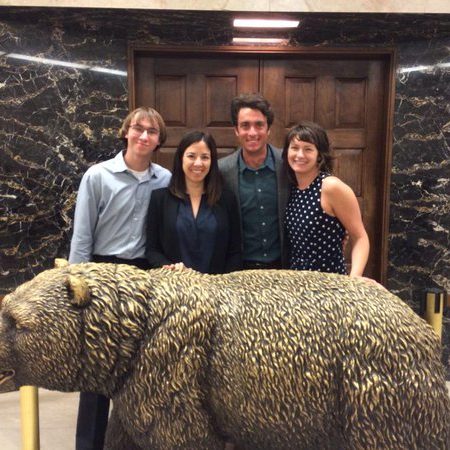
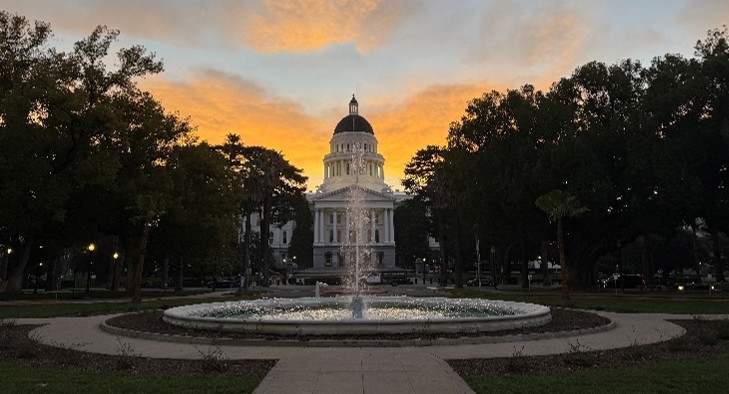
We maintain a regular presence at the State Capitol, representing local Waterkeepers and issues of importance to their communities and watersheds in Sacramento. Every session, we lead on at least one new law – and defeat anti-environment legislation to rollback or weaken existing laws. In addition, we track the development of more than fifty proposed state bills on water quality, water supply, coastal and ocean health, oil spills and fracking.
2025 Legislative Session
In 2025, CCKA co-sponsored and supported three key bills to protect water quality throughout California: Assembly Bill 263 (Rodgers) was enacted into law to protect water flows on the Scott and Shasta Rivers, Senate Bill 601 (Allen) would have ensured clean water protections remain in place in California as the Trump Administration dismantles the Clean Water Act nationally (this bill is continuing in the 2026 legislative session), and Assembly Bill 1313 (Papan) would have regulated commercial stormwater pollution for the first time and encourage stormwater credit trading to bring more green space to urban communities. CCKA will continue pushing this concept forward.
Some of the legislation that CCKA helped sponsor, support, and pass in previous years include:
- Equitable Water Rates (2024) – Assembly Bill 1827 (Papan) recognizes that water suppliers can use reasonable methods to assess the additional costs that high-water users place on the system to justify their rate structures.
- Increased Fines for Water Rights Violations (2024) – Assembly Bill 460 (Bauer-Kahan) raises penalties for water rights violations after a rancher’s association was fined only $50 per rancher for nearly draining the Shasta River and decimating its salmon population.
- Invasive Algae Ban (2023) – Assembly Bill 655 (Petrie-Norris) bans an invasive species of green algae, Caulerpa sp., to protect California’s coastal ecosystems.
- Clean Water for All (2022) – Assembly Bill 2108 (Rivas) requires the state to evaluate and mitigate the disproportionate impacts that California’s water policies and permits have on communities of color.
- Industrial Stormwater Permit Coverage (2022) – Senate Bill 891 (Hertzberg) requires industrial facilities that could cause hazardous water pollution to obtain a Clean Water Act permit before receiving a business certificate.
- Stormwater Capture and Reuse (2021) – Senate Bill 273 (Hertzberg) sets the stage for innovative water projects that can divert, capture, and reuse water that washes off streets, preventing urban runoff from polluting rivers and the coast.
- Freshwater Monitoring (2021) – Assembly Bill 1066 (Bloom) expands beach water quality monitoring beyond the coast to freshwater swimming areas, ensuring inland waters are safe for swimming.
- Living Shorelines (2021) – Assembly Bill 72 (Petrie-Norris) prioritizes living shorelines and natural infrastructure — such as wetlands and sand dunes — in sea level rise adaptation planning.
- Coastal Enforcement (2021) – Senate Bill 433 (Allen) increases the Coastal Commission’s ability to levy fines for violations and damage to wetlands, sensitive habitats, and coastal waters.
- Safe and Affordable Drinking Water (2019) – Senate Bill 200 (Monning) provides an annual appropriation of $130 million to the Safe and Affordable Drinking Water Fund to provide safe and affordable drinking water for all California communities without liability relief for agricultural polluters.
- Beneficial Reuse of Dredged Sediment (2018) – The California Legislature appropriated $6 million to the State Coastal Conservancy to develop a pilot program to promote the beneficial reuse of dredged sediment for wetland restoration.
- No New Offshore Oil Drilling (2018) – Assembly Joint Resolution 29 (Limón), Senate Bill 834 (Jackson), and Assembly Bill 1775 (Muratsuchi) block federal plans to expand oil drilling off the California coast to preserve the state’s coastline, culture, and economy.
- Potable Reuse (2017) – Assembly Bill 574 (Quirk) established a framework for direct potable reuse regulations – the first state in the nation to do so.
- Stormwater Financing (2017) – Senate Bill 231 (Hertzberg) provided local governments clear authority to finance stormwater projects to promote water conservation and manage polluted runoff, while treating low-income rate payers fairly.
- Recycled Drinking Water (2016) – Assembly Bill 2022 (Gordon) allowed purified recycled water to be bottled and sampled to educate decision-makers and the public on this viable water source and to support public investment in water recycling.
- Beach Water Quality Monitoring (2014) – Senate Bill 1395 (Block) authorized Counties to use a rapid beach monitoring test to provide an early warning and protect 238 million California beachgoers annually when it is unsafe to swim due to polluted runoff.
- Sustainable Groundwater Management Act (2014) – A three-bill package [Senate Bill 1168(Pavley), Assembly Bill 1739 (Dickinson), and Senate Bill 1319(Pavley)] created a framework for sustainable, local groundwater management for the first time in California history.
- Statewide Bag Ban (2014) – Senate Bill 270 (Padilla) enacted the nation’s first statewide ban on single-use plastic bags at grocery and convenience stores.
- Swimmable California Day (2013) – Senate Concurrent Resolution 48 (Hueso and Stone) proclaimed July 25th as Swimmable California Day to recognize Californians’ rights to clean and safe waters for swimming and other appropriate activities, and to encourage Californians to enjoy and use their waters.
- Drinkable Recycled Water (2010 & 2013) – Senate Bill 918 (Pavley) and Senate Bill 322 (Hueso), empowered the California Drinking Water Program to develop water recycling guidelines for advanced purified recycled water projects.
- Water Monitoring Council (2006) – Senate Bill 1070 (Kehoe) created the California Water Monitoring Council to integrate and coordinate the state’s water quality and related ecosystem monitoring, assessment, and reporting.