
Every time you pay your water bill, you’re part of a system that charges you many times more for water than it charges the state’s largest agricultural operations. That’s not an accident. It’s policy.
California is in a water crisis – groundwater basins are being drained, rivers are running dry, and nearly a million Californians lack access to safe drinking water. Meanwhile, hundreds of thousands of acres of water-intensive crops like almonds and pistachios continue to draw heavily subsidized water, year after year, drought or no drought. To understand why, you need to understand who the system was built for – and who it wasn’t.
Large agricultural users pay as little as $20 to $200 per acre-foot for water delivered through state and federal projects. Urban households, by contrast, pay $500 to over $1,000 per acre-foot once treatment, infrastructure, and environmental compliance are included. That gap – a 5 to 10x difference – is a policy choice, not a natural outcome. The largest agricultural operations have locked in access to subsidized water through entrenched legal rights and governance structures they largely control. They are positioned to profit from water scarcity, not suffer from it.
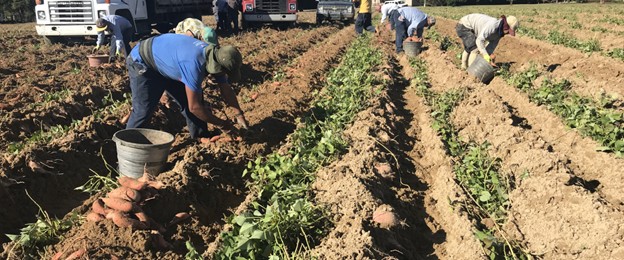
California agriculture is often portrayed as a broad-based, family-driven sector, but the underlying structure tells a far more concentrated and unequal story. A small share of landowners and large-scale operations dominate both landholdings and production, while the workforce looks entirely different. Only 4.6% of landowners hold nearly half of all California cropland. The top 7% of farms – those grossing over $1 million annually – produce 60% of all agricultural output. White, non-Hispanic growers own the vast majority of farmland, while more than 90% of the people who actually work that land identify as Hispanic or Latino.
California’s 2014 Sustainable Groundwater Management Act was necessary and long overdue – California was the last state in the nation to comprehensively regulate groundwater pumping. But it has accelerated a troubling pattern. Large agribusiness operations that pumped freely for decades have the capital to drill deeper wells, buy water on the open market, or hire lawyers to protect their rights. Small family farmers, operating on thin margins, do not. As water-poor parcels collapse in value, private equity firms and pension funds are moving in, acquiring water-secure farmland across the Central Valley at distressed prices. California is replacing family farming with financial farming: absentee ownership optimized for export profits, not community stability.
Not all agricultural water use serves the same purpose. Some crops feed California families and domestic markets. Others – like almonds, pistachios, and wine grapes – are grown overwhelmingly for export. Almonds alone use roughly 10% of all agricultural water in California, and up to 70% of that crop is shipped overseas. When California exports almonds, it is effectively exporting the water used to grow them: water drawn from aquifers that took centuries to fill, and rivers that rural communities depend on for drinking. Exporting agricultural commodities overwhelmingly benefits large landowners and institutional investors, not farmworkers and rural communities bearing the environmental and social costs.
When water runs short and fields go fallow, the first jobs lost are farm jobs. The communities that depend on those jobs – already among the most underserved in the state – lose the tax base that funds their schools, roads, and services. By 2045, 50,000 jobs are projected to disappear from the San Joaquin Valley alone. Many of the farmworkers and rural families who remain are already drinking the consequences. Nitrate contamination from decades of agricultural fertilizer runoff is the single leading source of groundwater pollution in rural California. Between 750,000 and 900,000 Californians – many in rural farming regions – lack access to safe drinking water. More than two-thirds of the water systems that fail to meet safe drinking water standards serve communities of color. California law recognizes clean water as a human right. California is not delivering it.
The people bearing the heaviest costs – fallowed land, contaminated wells, vanishing jobs – are the same communities that built California agriculture with their labor, and the same communities that have been systematically excluded from owning it. This is not a coincidence. It is the accumulated result of exclusion acts, alien land laws, and a century of policies that transferred land wealth upward.
The status quo isn’t working – but there is a better way. California’s next Governor should phase in true-cost water pricing for large agricultural users while protecting small farms, set enforceable limits on the fertilizer runoff poisoning rural drinking water, and reform water governance agencies to include the small farmers, farmworkers, and disadvantaged communities currently shut out of decisions. The state needs to restrict farmland acquisition by investment companies before consolidation goes further, and invest in job retraining and land repurposing for the communities bearing the cost of fixing a system they did not break. California is trying to manage water in the 21st century with 19th-century laws designed to serve the powerful few. It doesn’t have to stay that way.

Executive Director Sean Bothwell leads CCKA’s initiatives to fight for swimmable, fishable, and drinkable waters for all Californians.