
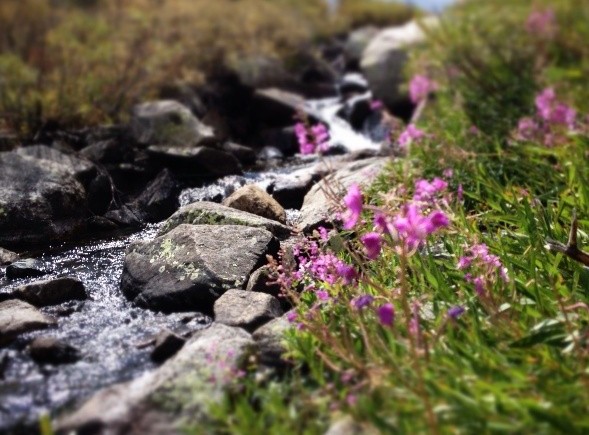
If you’ve ever hiked along a creek in August and found nothing but a dry bed of rocks, you’ve seen a perfectly healthy California stream. Our rain comes during a few winter months, and most of our creeks, washes, and wetlands go dry for part of the year. That’s just how California’s climate works. It’s also exactly how the federal government is now proposing to take clean water protections away from most of our state.
For more than 50 years, the federal Clean Water Act has been the backbone of clean water in America. If a stream, wetland, or bay counts as one of the “waters of the United States,” anyone who wants to dump pollution into it needs a permit. That permit sets pollution limits, requires testing, and makes the results public. And if a polluter breaks the rules, ordinary people can take them to court. But all of that only applies to waters that meet the federal definition. Waters that fall outside it lose those protections.
In 2023, the U.S. Supreme Court’s decision in Sackett v. EPA dramatically narrowed which waters count. Wetlands and seasonal streams across California began falling outside federal protection.
That’s why California Coastkeeper Alliance sponsored SB 601, the Right to Clean Water Act, authored by Senator Ben Allen. The idea was simple: if a waterway loses federal protection, California should keep protecting it the same way it always has, with the same pollution limits, the same cleanup plans, and the same accountability. But this summer, SB 601 died because the Newsom Administration prioritized his political interests over protecting Californians’ waters.
Since the death of SB 601, things have only gotten worse. On September 4, the Trump Administration proposed a new definition of “waters of the United States.” Under it, a stream would generally have to hold water every single day of the year to be protected. An analysis of the federal government’s own mapping data found that under a rule like this, only about 9 percent of California’s streams would stay federally protected. Protected wetlands would shrink from about 1.2 million acres to roughly 81,000. Sackett narrowed the Clean Water Act. This rule would practically erase it across most of California.
So if a streambed is dry, what’s the harm? The problem is that pollution doesn’t stay in a dry channel. All summer long, oil, metals, pesticides, bacteria, and tire chemicals build up on streets, industrial yards, and dry creek beds. When the first big winter storm hits, that pollution rushes downstream all at once into our rivers, bays, and beaches. These small, seasonal streams also feed our drinking water. More than 7.3 million Californians get their water from systems that rely on them. Stripping protection from these streams doesn’t get rid of the pollution. It just gets rid of the rules that control it.
California Coastkeeper Alliance plans to introduce new legislation in 2027 to close the gap left by Sackett and this new rule. Our goals are straightforward. First, we aim to keep the same clean water protections now under state law. Waters and polluters that lose federal oversight should face the same pollution limits under state law that they faced before. Second, we need to keep cleanup plans on track. Plans already underway to restore polluted rivers and beaches shouldn’t vanish because of Trump’s de-regulation. And lastly, we need to let Californians enforce the law. For 50 years, the Clean Water Act has let ordinary people take polluters to court when government doesn’t act. Citizens bring 83 percent of stormwater enforcement actions in California. We want that same right written into state law.
With a new Governor coming in 2027, the Legislature has a fresh opportunity to get this right. Speak up! Tell your state legislators that California needs to protect its own water, and that the next Governor should make it a priority. Follow California Coastkeeper Alliance and your local Waterkeeper for updates as we prepare the new bill. And the next time you see a dry creek bed, remember that it’s still a stream, and it still deserves protection.

Executive Director Sean Bothwell leads CCKA’s initiatives to fight for swimmable, fishable, and drinkable waters for all Californians.