

Marine animals, fish, and shellfish farmers along California’s coastline are suffering due to a wide range of human activities. Climate change is a big reason why our oceans now have less oxygen for ocean life to breathe and more acidic water. These changes have a cascading impact on the food chain. There are specific factors that regulators in California can control that could significantly improve conditions for sea lions and dolphins, seagulls, crabs, fish, and other wildlife. These changes would also help coastal businesses, which depend on a healthy ocean.
When high levels of nutrients collect in water and water warms up, it creates the perfect conditions for harmful algal blooms. Harmful algal blooms can wreak havoc in lakes, rivers, and the ocean. Our wastewater treatment facilities release sewage into the oceans along California’s sensitive coastline.
Especially when waters are warmer, like during late summer and early fall, these releases create a chain reaction that causes dramatic drops in dissolved oxygen in ocean water and increases in toxins that create health problems in marine wildlife. If you’ve heard about sea lions and dolphins dying on beaches or crabs having trouble making strong shells due to ocean acidification, urban wastewater releases are at least partly to blame.
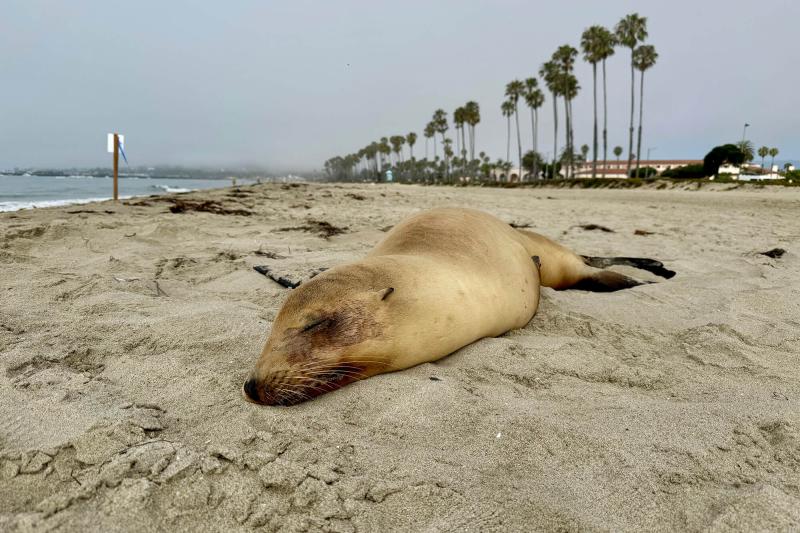
California sea lion stricken by the neurotoxin domoic acid from a harmful algal bloom in Santa Barbara County, California. Credit: Channel Islands Marine & Wildlife Institute via NOAA Fisheries.

© Gretchen Hooker/Pixel Naturalist

One way to significantly reduce the impacts of ocean acidification would be to develop and enforce clear water quality objectives based on the best available science. In March of 2025, the California Ocean Protection Council, a state body that aims to “ensure that California maintains healthy, resilient, and productive ocean and coastal ecosystems,” called on the State Water Resources Control Board to develop such objectives. Our marine wildlife is in crisis, and the problem is only growing worse – we must act with urgency to create clear standards so that we can measure and improve coastal conditions as soon as possible.
Ocean acidification and hypoxia are human-caused phenomena that make ocean waters less hospitable to marine life. The ocean is becoming more acidic due to climate change, a condition that often co-occurs with depleted oxygen levels, or hypoxia, due to excessive human-caused nutrient inputs such as wastewater discharges or agricultural runoff.
The global increase in greenhouse gas emissions is causing our ocean waters to absorb excess carbon dioxide. Nutrient pollution caused by the release of partially treated sewage into coastal waters makes the problem worse. Nutrient pollution can also cause harmful algal blooms, which are broken down by bacteria that consume much of the oxygen in the surrounding water and release large volumes of carbon dioxide. This process further depletes available oxygen for other marine life and changes the chemical balance of the water, making the ocean more acidic. This cycle has become commonplace along California’s coastlines, especially in Southern California during warmer summer months.

Dolphins and sea lions, birds, and other marine life have experienced harm from ocean acidification and hypoxia. For example, along the stretch of coastline from Santa Barbara County down into coastal Mexico, ocean acidification and hypoxia “hot spots” are common where conditions are so poor that fish and mammals struggle to survive at distances up to 50 miles offshore. These hot spots compress the available habitat for marine life by an average of 20% — and up to 60% — vertically and by 25% horizontally due largely to daily sewage discharges from coastal treatment plants. Marine mammals and birds have been sickened by toxins from algal blooms, leading to neurological symptoms like seizures and even death. Crabs, oysters, sea stars and other marine life have also had trouble forming shells and skeletons due to high levels of ocean acidification. If we don’t take aggressive steps to limit these impacts, California’s unique coastal environment will be severely and permanently damaged, which will also affect the state’s multi-billion-dollar tourism economy.

© Gretchen Hooker/Pixel Naturalist
California needs to get serious about addressing nutrient discharges to the ocean that are causing ocean acidification and hypoxia hot spots. The most effective way to limit impacts related to sewage discharges into the ocean would be for the State Water Resources Control Board to establish enforceable water quality objectives. The Board should be working diligently to establish these objectives and adopt regulations to enforce them by 2028. Such enforcement would likely require improved treatment of urban sewage prior to discharge, which would significantly reduce its impacts on the marine environment.
California can also reduce the volume of wastewater discharged to the ocean by recycling it into a drinkable source of water. California currently imports water from hundreds of miles away, uses it once, and then wastefully lets it pollute our coast. But we now have the technology and the regulations necessary to build potable reuse facilities that can recycle all of our ocean wastewater discharges. By discharging less wastewater into the ocean, we will reduce the area impacted by ocean acidification hot spots every summer.
Sign our petition to urge California leaders to reduce the impacts of nutrient pollution on marine wildlife.